
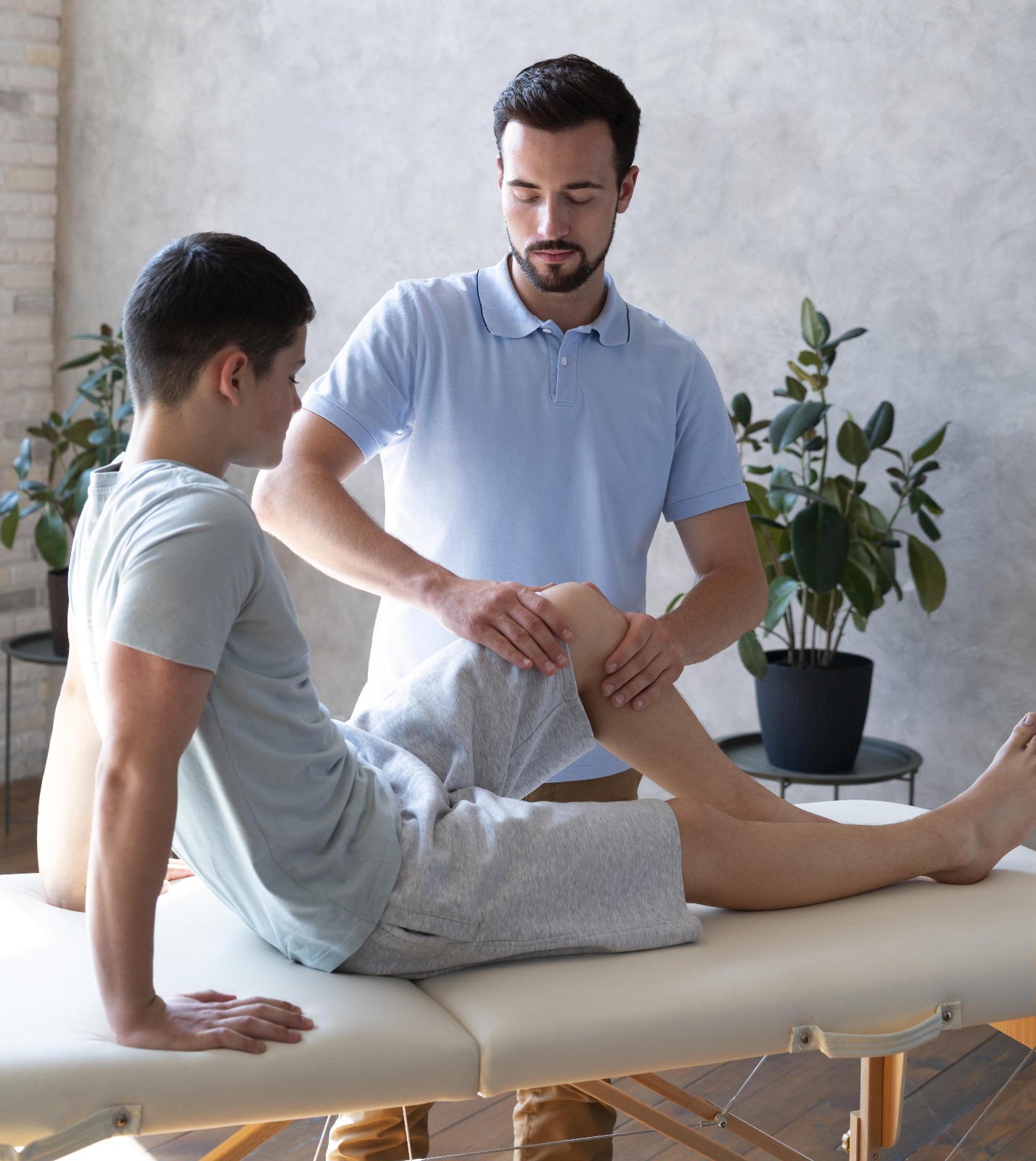
Children Sports Injuries and Rehabilitation
- What are the most common types of injuries in children?
- The most common types of injuries include overuse injuries, strains or sprains, broken bones, and concussions. Kids bounce back quicker than adults, but the injuries children experience should still be treated and monitored quickly. Even minor strains and sprains can cause muscle imbalance or lack of mobility. Let’s look at four common types of sports injuries kids experience:
- 1. Strains, sprains, and bruises
- These types of injuries (mostly common in contact sports) occur when the muscles, tendons or ligaments are overstretched, which can lead to injuries that involve a partial or complete tear. Children typically get bruises from bumping into things. They generally don’t require physical therapy and can be treated with ice packs, elevation, heat, and pain medication if necessary. Physical Therapists can introduce your child to early mobility gradually, within the limits of pain and as safely as possible to help your child return to sports more quickly and safely. Some strains may also lead to major injuries that might require surgery to repair the damage, followed by physical therapy.
- 2. Overuse injuries
- Overuse injuries occur due to repetitive motions made over an extended period. For instance, throwing a baseball, swimming strokes, bumping a volleyball, or tennis serves. This can lead to conditions such as bursitis, tendonitis, and other overuse injuries. Rest and braces can help relieve pain, but physical therapy can help get rid of inflammation and chronic pain, restore full range of motion, and help build up muscle strength to prevent further injuries.
- 3. Broken bones and fractures
- Some sports injuries result in broken bones or fractures. The bone will need to be immobilized by a splint or cast, depending on the severity of the break/fracture. This helps the bone heal, although this period of inactivity can result in stiffness and weakness in the muscles and joints, requiring physical therapy to assist with return to sport care. As well as this, the surrounding joints, ligaments, and tendons may also get injured, sometimes taking longer to heal than bones. Physical therapy can help restore range of motion and combat stiffness.
- 4. Concussions
- A concussion is a type of traumatic brain injury that results from a bump, blow, or jolt to the head. While concussions are classified as a “mild” brain injury – as in they’re usually not life-threatening – they can be serious if not treated appropriately. Repeated concussions over a long period can also result in more permanent and debilitating brain and neurological damage. Concussions require careful monitoring and rest until the symptoms go away and the injury fully heals. Once symptoms have improved, physical therapy can assist with vestibular, balance, and vision side effects. Always consult your family physician or paediatrician before returning to normal activities. What are the most common body parts injured in children? The most common body parts injured include the ankles, knees, muscles, shins, tendons, and hips.
- ✓ Ankles Injuries
- Ankle injuries are most often acute sprains. Sometimes ankle pain can be caused by going back training too much or too soon. Generally, the ligaments on the outside of your ankle are the ones that get injured when you ‘roll’ or ‘twist’ your ankle.
- ✓ Knees Injuries
- Knees are a common site of injury and pain in adolescents due to the prevalence of the dreaded ACL. Knees can be prone to overuse issues but are also a major site of acute injuries. Acute injuries are more likely to cause damages such as ligament sprains/tears.
- ✓ Shin Splints
- Shin splints are common sports injuries in children that participate in sports that require repeated running on a hard surface, causing pain and discomfort on the front of the lower legs (shins). They can also be caused by overtraining at the beginning of the session without proper conditioning.
- ✓ Muscle injuries
- Three common muscles injuries are those that cross two joints, such as the hamstrings (the hip and knee joints), the calf (the knee and ankle joints), and the quadriceps (the hip and knee joints).
- ✓ Tendon injuries
- Common tendon injuries can be known either by the sport that usually causes them or the tendon that is affected: Tennis elbow (lateral epicondylitis), Golfer's elbow (medial epicondylitis), Achilles tendonitis.
- ✓ Hip injuries
- Bursitis is a very common hip injury in sports like soccer, football, and hockey players. When there is prolonged pressure on the hip’s bursae (fluid-filled sacs), they become inflamed, resulting in bursitis, a painful condition that causes extreme discomfort with every movement of the affected hip joint. Its treatment includes ice baths, steroid injections, medications, and physical therapy. Unfortunately, bursitis tends to become a chronic condition and can recur again and again. Tendonitis is another result of chronic overuse, one of the most common hip injuries in sports. For example, when athletes suffer a hip pointer, blood flow in the injured area increases, resulting in inflammation. Hip tendinosis also affects the tendons and causes the ligament to deteriorate and weaken. In worse cases, the tendon’s composition, and shape change, impacting the hip’s overall function. Tendinosis and tendonitis are common hip injuries in athletes whose sport requires constant hip movement. Swimmers, marathon runners, golfers, and tennis players have a high risk for both. The hip socket is surrounded by a thick tissue (the labrum) that supports the joint and its movements. If an athlete miscalculates a move and sharply twists their hips, the labrum can tear or become pinched. Symptoms include a “locking” sensation or stiffness of the hips and soreness in the groin area.
- Children Sports, or Musculoskeletal, Physiotherapy can help reduce inflammation and chronic pain in kids, restore their range of motion and flexibility, and build muscle strength. An unfortunate side effect of youth sports is that children can sometimes experience sports injuries that require sports, or musculoskeletal physiotherapy to properly heal.
- Physiotherapy is a great option for treating sports injuries and usually has kids up and running again with little downtime. Other sports, from swimming and gymnastics to track and field, also run the risk of causing injuries. Being physically active is great for kids but it can lead to injuries. Children should always wear the protective required gear for the sport they’re playing.
- How can Children Sports Physiotherapy help my child recover from a sports injury?
- Treating a sports injury depends on the nature, duration and severity of the injury which may vary from child to child. For example, minor strains, sprains, and tears of tendons, muscles, and ligaments may be treated with rest, ice, compression, or elevation; however, early mobilization is vital to return to sports more quickly and safely and prevent further injuries. A Physiotherapist can safely assist with this.
- On the other hand, major strains and tears might require surgery to repair the damage, followed by Physiotherapy.
- While a splint or cast is usually the best way to help bones heal, the period of forced inactivity can lead to muscle atrophy, weakness, and stiffness. We offer children sports physiotherapy to help restore range of motion, flexibility, and muscle strength so your child can return to sports safely and in such a way that we can avoid similar injuries in the future.
Available at our Santry and Swords clinics.
Book an Appointment